



I love it. It is what I expected!!
Free U.S. shipping
Returns policy
Copper Alembic Still & Distiller Kit, Hand-Hammered
Copper Alembic Still & Distiller Kit, Hand-Hammered
For hydrosols, essential oils and floral waters. In stock, assembled on arrival, guaranteed for life.
Regular price
$399.95 USD
Regular price
$449.95 USD
Sale price
$399.95 USD
Taxes included.
Shipping calculated at checkout.
Most choose 5 Gallon. It takes 2-3 kg of plant material per run and still fits on a countertop. Compare sizes
Quantity
Couldn't load pickup availability
Bundle · Save $30


Know what your still can do before your first run. The Distiller's Archive, our 9-part reference. Read it while your still ships.
What's in the Archive
- The Codex: the complete owner's manual, covering anatomy, your first run, the 8 modes and troubleshooting
- The Run Calculator: charge weight, water volume and run time for every size
- Plant Codex: 42 botanical datasheets covering season, preparation and cautions
- 20 tested recipes: lavender, rose, peppermint and more, print-ready
- Legal reading list: the federal rules, and where to look up your own state's statute
- Batch Log and temperature charts: record every run and repeat the ones that worked
Written by our team · instant access from your account · free lifetime updates.
Free US shipping · arrives in 3-7 business days
In stock in the USA and on its way within 1-2 business days
-
Lifetime guarantee
Seams, joints & workmanship -
Secure checkout
Visa, Mastercard, Amex, Discover or PayPal -
Hand-hammered copper
Shaped by hand, in small batches -
30-day returns
See return terms
You'll get a shipping confirmation the moment your still is on its way. Questions before you buy? Ask us. We reply in 1-2 business days.
Copper alembic still kit · Hand-hammered
One pot of lavender. One quiet afternoon. Your first bottle by tonight.
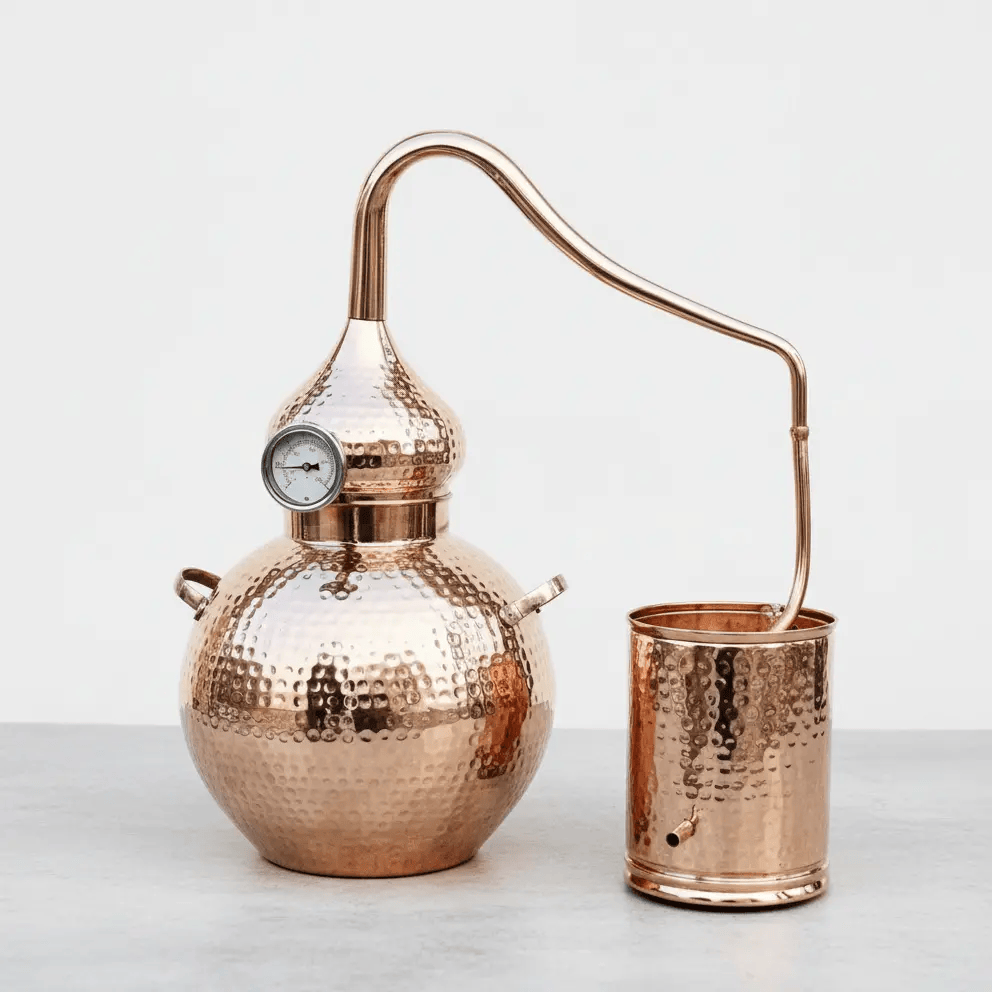
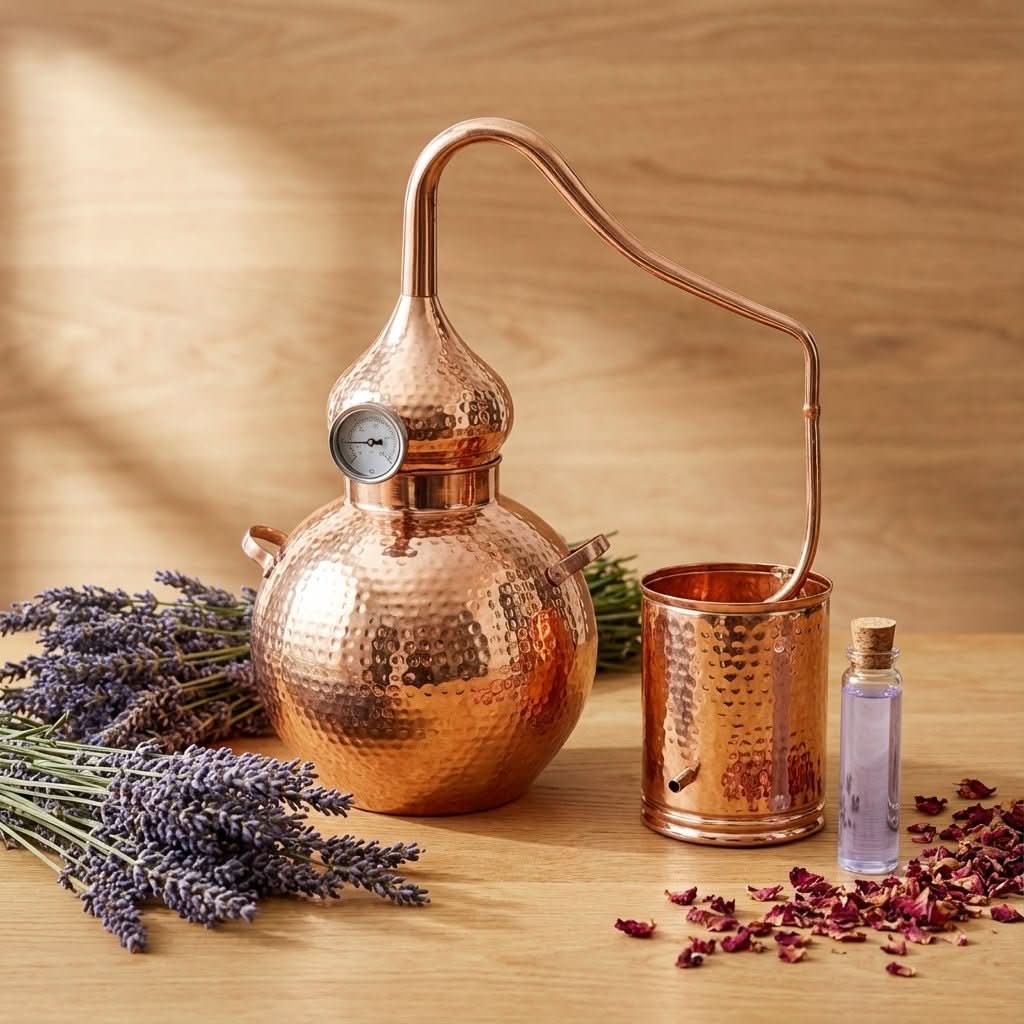
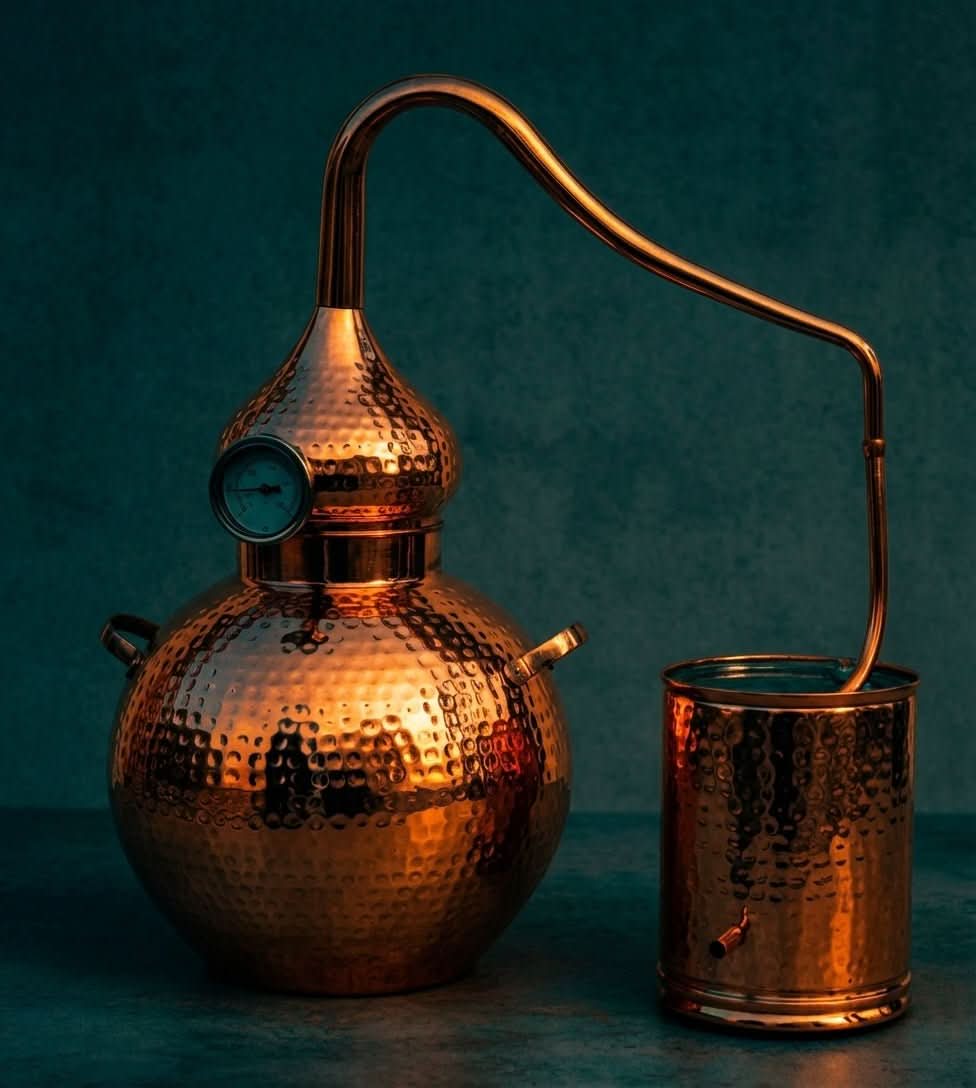
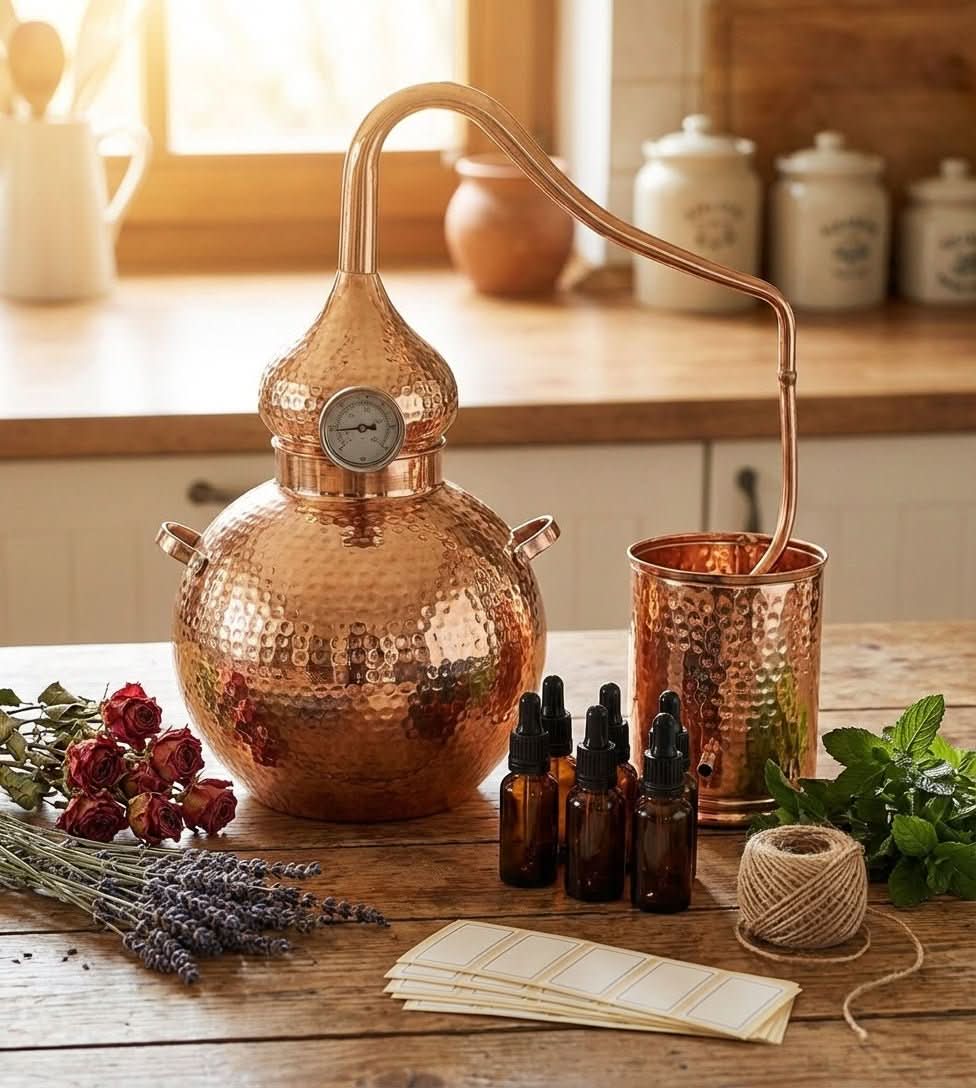
This is a copper alembic still: a hand-hammered copper boiler, a traditional alembic head, a swan neck, and a condenser that turns fragrant steam back into liquid. People have distilled essential oils, hydrosols, floral waters and pure distilled water in exactly this shape for a thousand years. Ours arrives assembled, is guaranteed for life, and is sized for a kitchen stove.
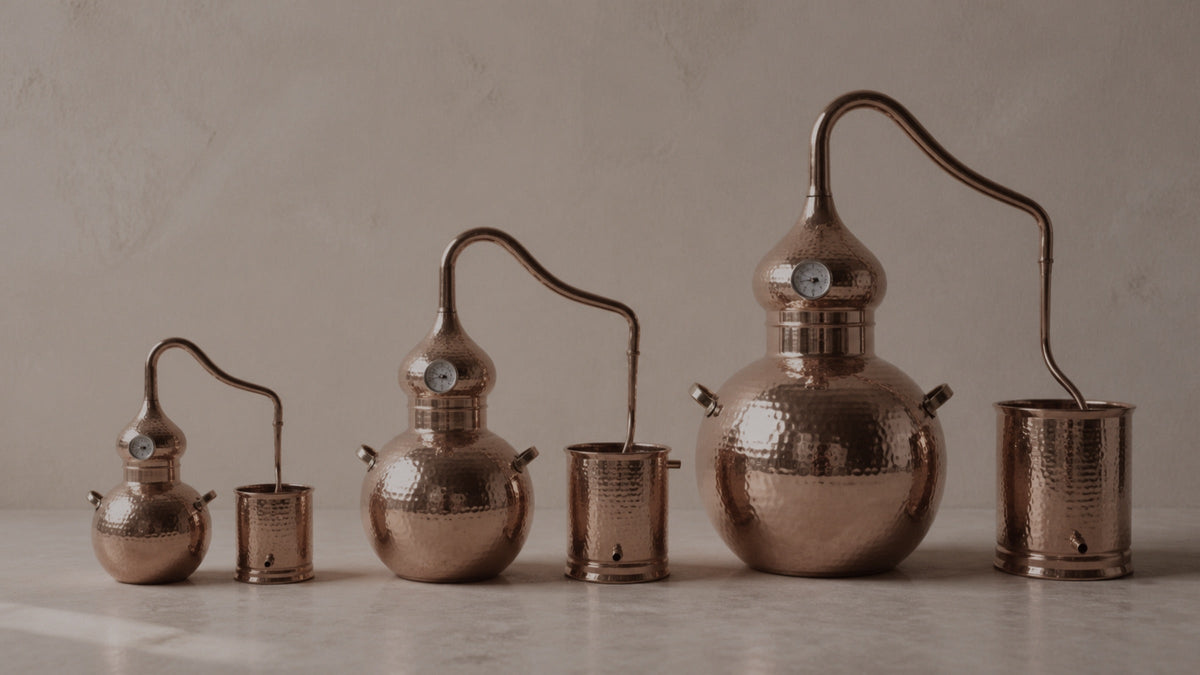
Three sizes live on this page, or view each alone: 5L copper still · 5-gallon copper still · 10-gallon copper still. You can also browse every copper still for sale or start with the copper still size guide.
What is in the CopperHolic copper still kit?
Everything arrives in one box, already assembled. You supply the heat and two lengths of ordinary hose for the condenser.
Hand-hammered copper pot1.1mm thick copper boiler, shaped entirely by hand
Copper swan neck & helmThe traditional alembic head that gathers the vapor
Copper condenser coilA spiral coil sits in a bucket of cold water and turns steam back to liquid. No plumbing, nothing to install
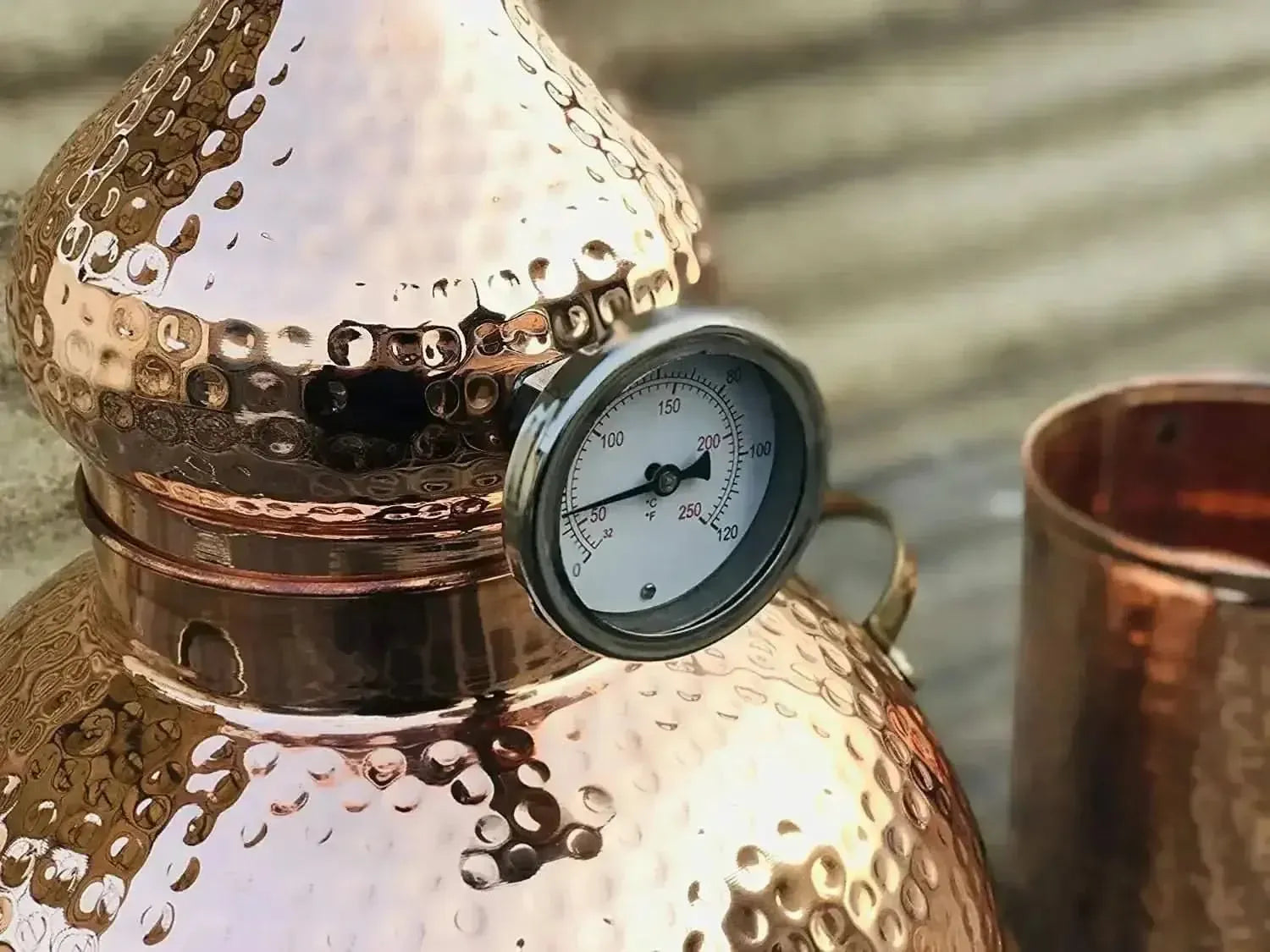
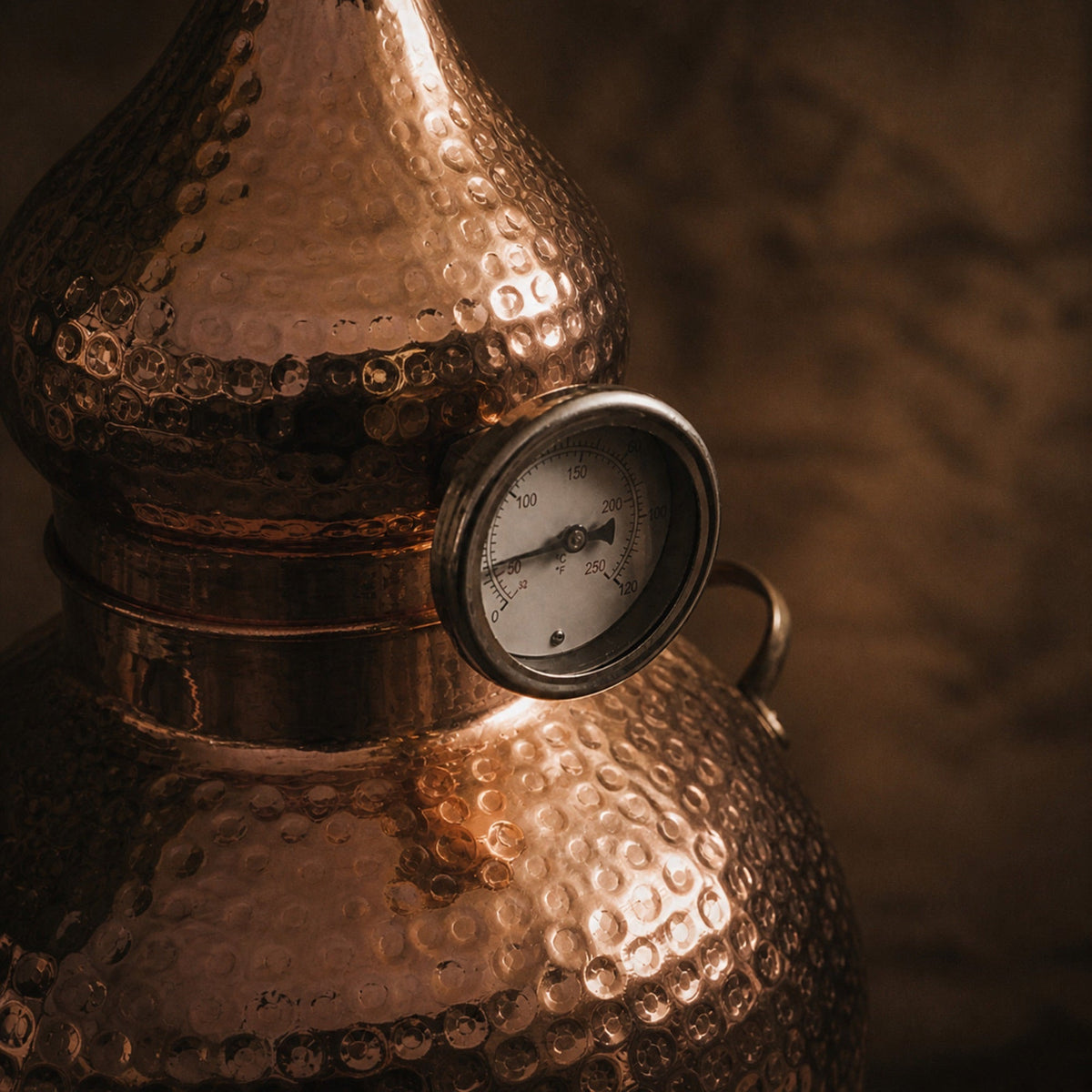
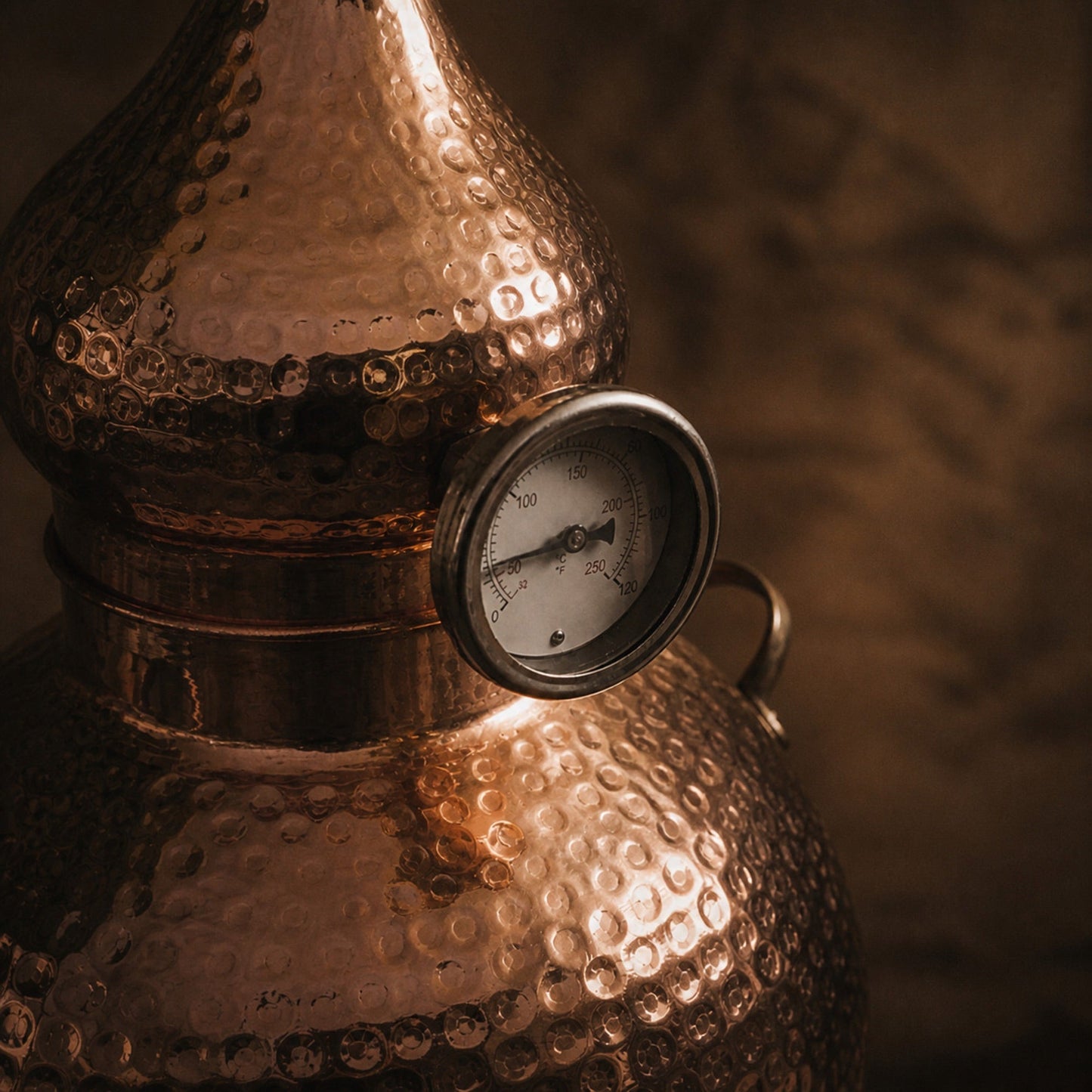
Built-in thermometerWatch the run and hold your temperature


What can you make with a copper alembic still?
Four crafts, one tool. The still does not care which one you fall in love with first.
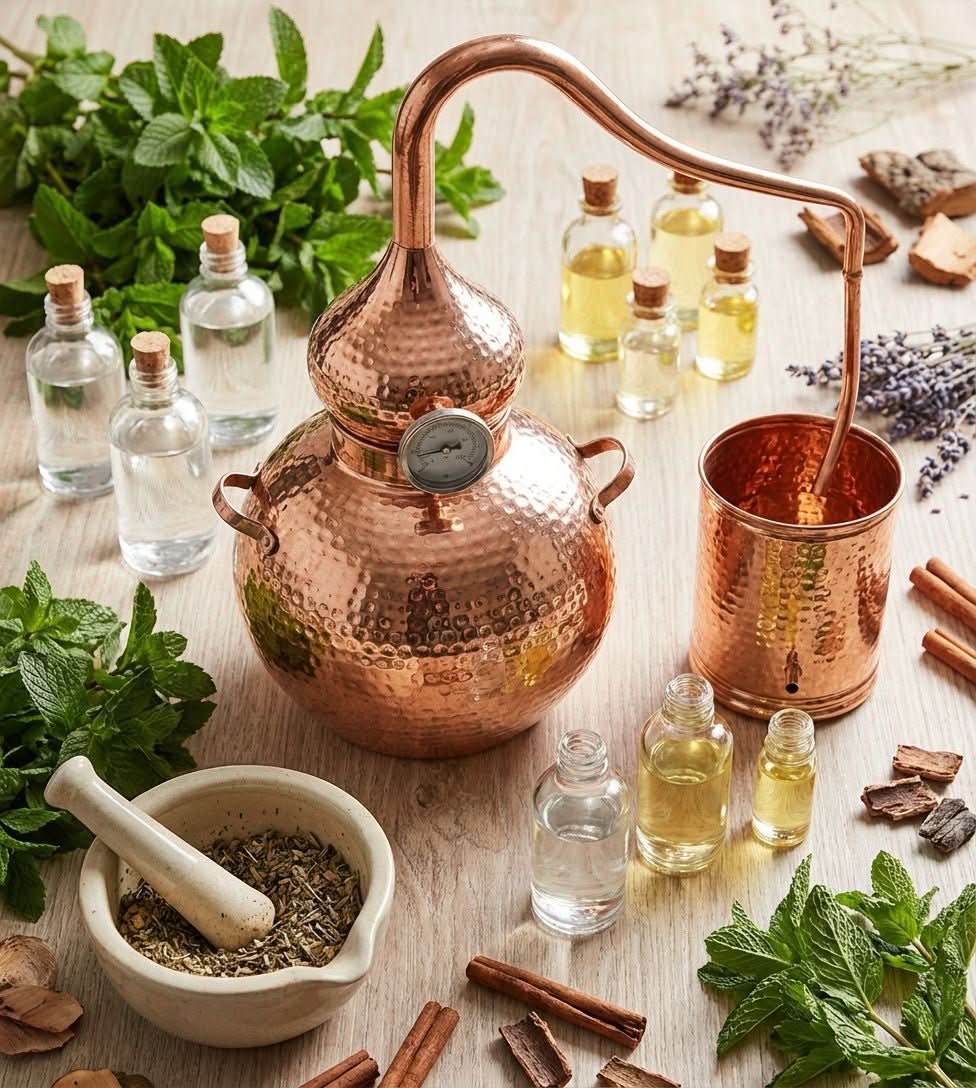
Essential oilsLavender you grew, in a bottle
Steam-distill lavender, eucalyptus, rosemary and dozens of botanicals into pure essential oil. Even spice-rack materials like clove run at 10 to 20 percent yields.
HydrosolsRose water for your skin
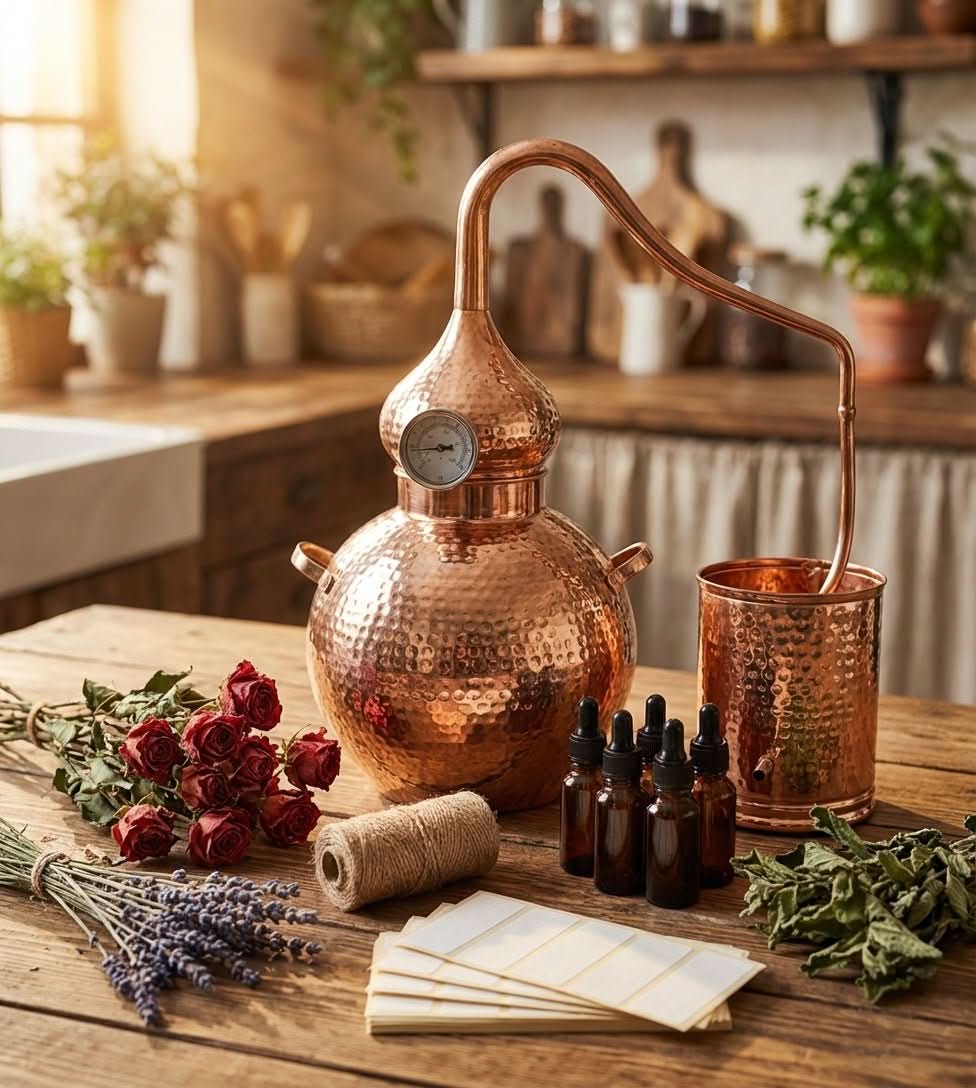
Gentle floral waters for skincare, linen sprays and natural fragrance, made in an afternoon: rose water, orange blossom water, helichrysum.
Botanical extractsThe garden, concentrated
Herbs, roots and flowers distilled into richer, more complex aromatic profiles, from frankincense resin to vetiver root.
Distilled waterPure water from your tap
For steam irons, humidifiers and batteries. The everyday reason it earns its counter space. Here is how.
Twenty-eight step-by-step guides cover exactly what this still makes, plant by plant. See everything you can make with it.
Why has copper been used for distillation for 1,000 years?
Copper is not decoration. Distillers have trusted alembic stills for over 1,000 years because the metal itself does the work:
- 01Removes sulfur compounds, so distillates come through cleaner, with no off-notes
- 02Enhances aroma and purity, unlocking richer, more complex profiles in oils and waters
- 03Superior heat distribution, for even warmth and precise control through the whole run
- 04Naturally antimicrobial, because copper inhibits bacteria for safer, purer results
From the workshop
Every still here begins as a flat sheet of copper and is raised into shape by hand, the way master coppersmiths have done it for generations. The hammer marks are not a texture we print on. They are the record of the work, and no two stills carry the same pattern.
The inside is tinned, the outside polished, and every seam is closed with lead-free silver alloy solder. Then it is packed, and it becomes yours. If a seam, a joint or any of our workmanship ever fails you, we repair or replace it for as long as you own the still. That is the whole agreement.
Technical Specifications
| Copper thickness | 1.1mm hand-hammered |
|---|---|
| Solder type | 100% lead-free silver alloy, food-safe throughout |
| Material | Pure copper |
| Construction | Hammered, shaped, tinned & polished by hand |
| Assembly | Arrives fully assembled and ready to use. No soldering, no torch, no tools required |
| Heat source | Gas, electric, and induction compatible (with adapter) |
| Guarantee | Lifetime craftsmanship guarantee |
Which copper still size should you buy?
5 Litre5 L boilerCompact · $399.95Ideal for essential oils, hydrosols & floral waters. Best for beginners.
Most popular5 Gallonabout 19 L boilerVersatile · $499.95The all-rounder for serious hobbyists. Larger batches, room to grow.
10 Gallonabout 38 L boilerPro Batch · $1,299.95Maximum output for large batches and serious home producers.
| 5 Litre | 5 Gallon ★ | 10 Gallon | |
|---|---|---|---|
| Best for | Beginners & small batches | Most people, the all-rounder | Large batches & selling |
| Plant material / batch | 1-2 kg | 2-3 kg | 6+ kg |
| Essential-oil yield | Depends on the plant far more than on the still. Lavender gives a usable amount of oil from a few kilos. Rose gives a small fraction of that from the same weight, which is why rose oil costs what it does. Every size makes hydrosol generously. | ||
| Run time | 1-2 hrs | 2-3 hrs | 3-4 hrs |
| Space needed | Countertop | Countertop | Dedicated space |
| Assembled size (H x L x W) | 21 x 26 x 11 in | 25.6 x 29.5 x 12.6 in | Ask us |
| Weight | 10 lb (4.5 kg) | 21.9 lb (9.9 kg) | Ask us |
| Price | $399.95 | $499.95 | $1,299.95 |
Not sure which size suits your harvest? Run your plant and batch size through the free Yield Calculator to see expected oil and hydrosol yield before you buy.
Not sure which size? Read our size guide
Every still is food-safe, built with lead-free silver alloy solder. Sold as botanical distillation equipment: distilling alcohol has its own federal permit rules, and a few states have their own rules on still ownership. Our plain-English US legal guide covers it in two minutes.
How do you clean and care for a copper still?
Rinse after useA warm water flush after each session
Lemon & salt polishBrings back the shine in minutes
Let it ageCopper develops a rich patina, the mark of the real thing
Hand-hammered · Guaranteed for life
Your first bottle is one decision away.
Pick a size, and it ships within 1-2 business days.
Visa · Mastercard · Amex · Discover · PayPal
Free US shipping · Lifetime guarantee · 30-day returns
One still, four names
Search for a copper essential oil distiller, a hydrosol distiller, a copper water distiller or a small copper still and you land on the same object: a hand-hammered alembic with a pot, an onion head, a swan neck and a coil condenser. The 5 Litre is the small copper still. The 5 Gallon is the essential oil distiller most owners choose. The 10 Gallon is the studio size. Shop them by use: essential oil distillers, hydrosol distillers, copper water distillers.
Do you need a basket, a column or an oil separator?
Not to start. Every size arrives complete and assembled, and most first runs put the plant material straight into the water. A botanical basket or column is a steam-distillation refinement for later, and a tall glass jar with a pipette separates the oil until you want a Florentine flask. Gas and electric stoves work as they are, induction needs an adapter disc because copper is not magnetic, and a gas burner or camp stove needs no electricity at all.


Still have questions?
Questions buyers ask us most
Is it legal to own a copper still in the United States?
Copper alembic stills are widely bought and owned across the United States for distilling essential oils, hydrosols, floral waters, distilled water and botanical extracts, and that is what almost all of our customers use them for. Distilling alcohol to drink is a separate matter: it is regulated by federal law and needs its own permit, whichever still you own. State law also differs, and a small number of states restrict owning a still whatever you plan to distil. We are not able to give legal advice, so please check the rules in your own state before you order. If you are unsure, email us and we will tell you what we know.
What can I actually make with a copper alembic still?
Four things. Essential oils: steam-distill lavender, rosemary, eucalyptus, peppermint and dozens of botanicals. Hydrosols and floral waters: rose water, lavender mist and chamomile water for skincare and natural fragrance. Botanical distillates: concentrated aromatic extracts from herbs, roots and flowers. Distilled water: for steam irons, humidifiers and topping up batteries, made from your own tap water. Copper is prized for all of these because it removes sulfur compounds, which is why it is the standard in commercial distilling too.
What’s the difference between a copper still and an alembic still?
Copper still is the broad term for any still made of copper. An alembic still is a specific traditional design: a rounded copper pot, an onion-shaped head that collects vapor, and a coiled condenser that cools it back to liquid. Every CopperHolic still is a copper alembic still: the centuries-old alembic shape, hand-hammered from pure copper. The design has been trusted for over 1,000 years because copper conducts heat evenly and strips unwanted compounds from the distillate.
Which copper still size should I choose?
The 5 Litre suits beginners and anyone making essential oils, hydrosols and small floral-water batches. It is compact and the easiest to handle. The 5 Gallon is our most popular size: the all-round choice for serious home distillers who want room to grow. The 10 Gallon is built for large-batch production, botanical studios, and small commercial use. Not sure? Our copper still size guide compares all three side by side.
What if it arrives damaged or dented in shipping?
Every still is double-boxed and corner-protected before it ships. If anything arrives damaged, even a cosmetic dent, email us a photo within 48 hours of delivery and we will ship a full replacement at no cost to you. You pay nothing, and we cover the return shipping.
I’ve never distilled before. Is this beginner-friendly?
Yes. This is the still we recommend most often to first-timers. It arrives assembled, so there is nothing to build, and the step-by-step setup walkthrough and the starter recipes for lavender, rose and peppermint are in your account the moment you order. Most people finish their first hydrosol the same day the box arrives: about twenty minutes to unbox and rinse, then one to three hours for the run depending on the size you chose. If you get stuck, email us a photo of what you are seeing and we will walk you through it.
How do I know this is real copper, not copper-plated?
Every CopperHolic still is solid copper, hand-hammered from sheet, not cast and not plated. Two honest tests. Solid copper is heavy for its size, and a magnet will not cling to it. The clearest tell is time: over a few months of use a solid piece darkens into an even patina across the whole surface, including the places you handle most, which plating cannot do because it wears through instead. We will not tell you to scratch it. The interior is tin-lined for food contact, and scraping that lining is the one thing you should not do to a still.
How long until I actually make something with it?
From doorstep to finished hydrosol: typically one afternoon. Unboxing and first rinse takes about 20 minutes. A complete hydrosol distillation run (lavender or rose water) takes 60-90 minutes once you’re set up. Your first essential oil run takes longer because you need far more botanical material, so plan a weekend for that one. The included guide walks you through both.
What comes in the box, and what will I need to supply?
In the box: the hand-hammered copper pot, the swan-neck helm, the coil condenser and the built-in thermometer, assembled and ready to run. You supply the heat. The still sits on your own stovetop, and gas or electric work as they are, while induction needs an adapter plate. You will also want two lengths of ordinary hose for the condenser, one carrying cold water in and one carrying it out. A botanical basket is not included and you do not need one to begin: most first runs put the plant material straight into the water, which is how hydrosols have been made for centuries.
What is your return and guarantee policy?
You have 30 days from delivery to return an unused still. Opening the carton to inspect it is fine and does not affect your right to return. A still that has been used for a distillation run cannot be returned. Change-of-mind returns carry a 15% restocking fee and you pay return shipping. If the item is damaged, defective, or not what you ordered there is no fee and we cover return shipping. Separately, every still carries a lifetime guarantee against defects in seams, joints and workmanship. Full terms are on our returns policy page.
Owner reviews
Average rating, out of 5, from people who own this still.
What owners say after their first runs
Reviews are published as written, from people who bought and use this still.
Photos welcome. It takes about two minutes.
From owners' kitchens and workshops
Perfect for small batch essential oils
As a newcomer to the distilling game I did some research and decided this still would be best suited for my needs. It is beautifully crafted and easy to assemble. If you are buying this still to use and not for looks as some people have reviewed, my advice is to research what distilling entails. I didn’t realize all that was involved. After one use, I can say it was worth the money and overall easy to “operate”.
I love this thing!
This is my very first still and I am so happy with it! I’ve used it twice already, distilling hydrosols. I was a bit intimidated at first, but it is super easy. All you need to do is buy some plastic tubing from your local brew shop, but honestly, you could even get away without using any. I am very impressed with the craftsmanship. It is so beautiful, especially with the sun shining down on it! Also, it doesn’t leak out steam from the pot/onion head, which I was very impressed with. I do, however, use dough to seal the seam at the swan neck to the condenser just for extra reinforcement. I love this thing so much! I just wonder if there is an attachment that exists for it to allow you to steam distill…
The quality number one
Very very nice thanks
Quick delivery - high quality product
Just got my alembic still in the mail today! Each item was carefully packaged. The whole set-up looks amazing. The craftsmanship clearly shows itself in the details. It comes with a booklet explaining detailed brewing instructions as well as care tips. Good stuff for sure!
The item is exactly as described, very nice customer service. :)
Wow.
Beautiful!
So pretty!! I’m very happy and can’t wait to use!
Great Product
Quality is always perfect.
The copper still is beautiful and great quality
Although I haven’t used it yet, this still is beautiful and great quality
Still
Get quality, easy to use. Love it
great for home use
excellent
Excellent unit.
High quality, would recommend.
Beautiful piece of art and craftsmanship.
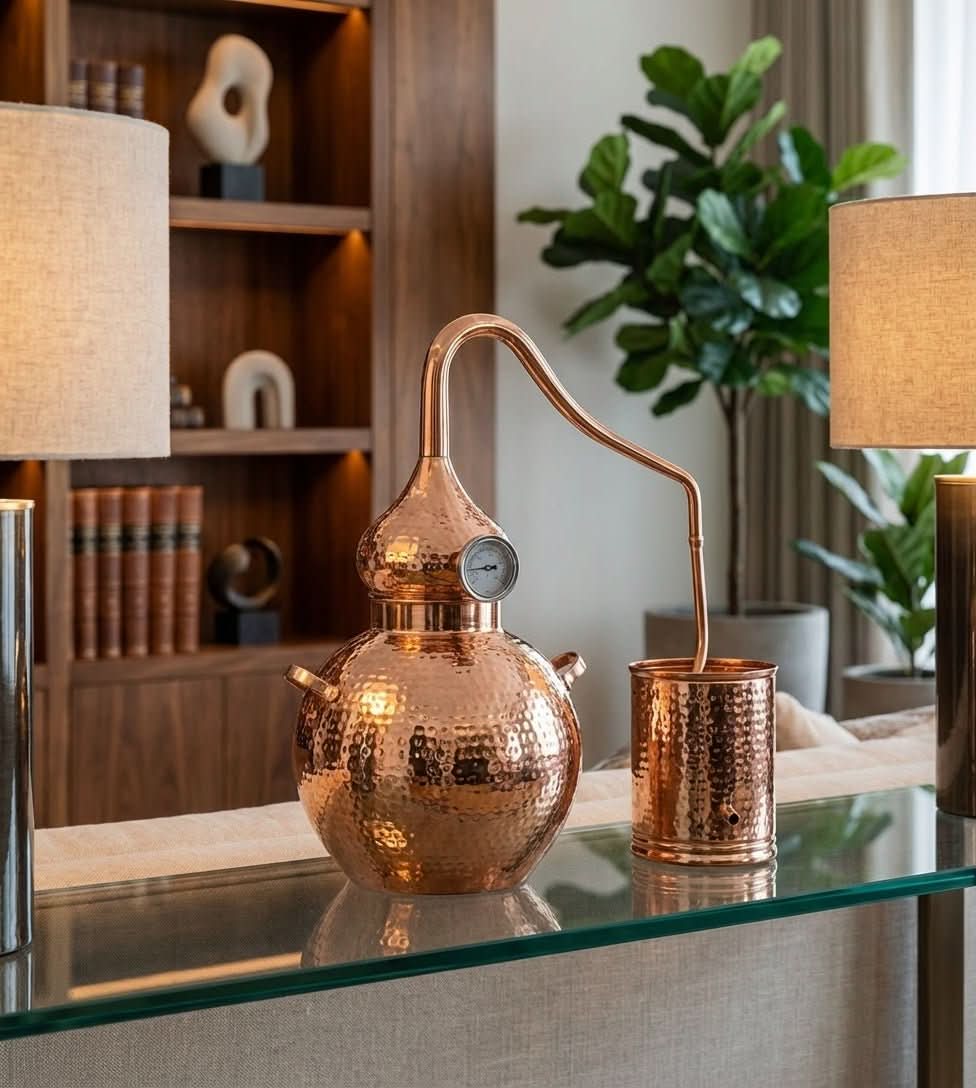
It is very well made. I didn’t used it for distillation because it is so beautiful that I decided to use it for decoration.
Great quality
Great quality for the price, will most likely get the 5 gallon at a later date
Excellent product
Love it, I bought the bigger one last year. Liked it so much I decided to go ahead and purchase the 5l one as well. Gorgeous pieces of hand made copper, decent gage metal thickness. Perfect
Fine Art
Way more beautiful in person. I am impressed with the fine details and quality craftsmanship. I definitely recommend this.
Great job
This is a beautiful piece and was amazing that it was unharmed in shipping I like it a lot fixing to make a run of essential liquid soon
Excellent copper still
I purchased the 20-liter copper still for my dad as a Christmas present. We set it up and did a cleaning run and it worked perfectly! We did not even use a flour paste to seal it and it didn't leak one bit. We are going to enjoy this still!
Best still for price
Still was even better than advertised, came packaged very well and undamaged. Making first run, and everything works perfectly!
Beautiful.
Beautiful craftsmanship!
I am experienced and have others but this is my favorite
I love everything about it
Great product and customer service
Easy to use and producers great product.
Really easy to use great piece of equipment
Really easy to use great piece of equipment
Wonderful
Beautiful and well made. If not using excellent decor
so cool
beautiful , picture does it no justice. had comments how beautiful it is. have"nt had the chance to try it.
Fantastic Product, Fantastic Amazon Seller!
What's not to like the thing looks great and the buying/shipping process was seamless. THANKS A MILLION COPPERHOLIC!!!!
A true work of art!
I havent ben s impressed with a purchase in years. Its a true work of art and does the job in style.
Beautiful
Great product. A welcome addition to my 1930s style bar. Absolutely beautiful. Made Rosewater to test it and it was flawless. Great customer support also. Thank you Copperholic!!!
gorgeous
this is a large piece, make room for it.
Beautiful!
I purchased the still to create essential oils and have had a pleasant experience thus far. The customer service provided by Copperholic has been outstanding. This still is absolutely a piece of art. Not only is it beautiful, it is very well designed. Thank you, Copperholic!
Great Item
Very attractive and fun product!
Functional work of art
Perfect! A work of art, and a a great still, I would buy this again if I needed one, and would recommend it to anyone looking for a 5 gallon still. I have made several runs of apricot brandy, and after a little trial and error, I’m making darn good brandy. Beautifully made, easy to set up, I would say it will become a family heirloom, art and function!
Awesome still
Looks great, I have it on display in my apartment and get compliments from guests all the time. The still it self is well constructed and easy to use. Even comes with a handy information packet with detailed cleanings and maintenance instructions.
I love it!
Very high quality product. I love it. It makes the process of making my own rose hydrosol a lot of fun. I also like their customer service: very responsive and very helpful.
Solid built
This is very robust and helpful
well worth it
we love the look of it and the durability of it
Happy Customer
This looks even nicer in person. Very well made and packed. Probably the best copper still I have come across.
Easy to set up and use
Works great easy to set up tastes great will be buying another soon looks just like the picture
Made in the USA
Made in the USA 🇺🇸
No reviews match that filter yet.